Why a Dental Clinic's AX Beat a Company's: Authority, Infrastructure, Rewards
Who this is forAX leads whose company AI rollout has stalled in cross-team talks, and professionals who want to build their own AI agent for routine work.
TL;DR: This dental clinic director held authority, infrastructure, software skills, and business knowledge all at once, and the money he saved went straight to him. Companies need to pool those four into one team and attach rewards. Individuals should start by measuring one repetitive task.
Contents
- The dental clinic director who pulled his own cable
- Six things the director built
- Why the clinic moved faster than the company
- Success metrics and rewards landed on one person
- What should companies do?
- How should individuals start?
If you’ve been put in charge of AI adoption at your company and cross-department talks have stalled, this case is worth comparing against your own. In October 2026, a neighborhood dental clinic director posted in the AI Home Lab community on Arca.live (a Korean community site). He said he majored in biology and had only briefly touched computers as a kid. Yet the clinic’s back room now holds a server rack, AI answers the phones first, and AI matches insurance documents overnight. The post drew over 10,000 views, and an IT infrastructure professional commented, “You’ll probably do better than me.” All figures below are ones the director published, and he said he wrote this post with AI too.
1. The Dental Clinic Director Who Pulled His Own Cable
It started not with AI but with a construction bill. The director, who had gathered loans to prepare to open the clinic, was shocked by the network installation line on the interior contractor’s quote. He asked how anyone could charge that much to run a few network cables, and decided to do it himself.
- Lifted the ceiling tiles and fed the cable through
- Crimped LAN connectors, mounted a switch, and configured the router
- Got help from a familiar interior contractor on the hard parts
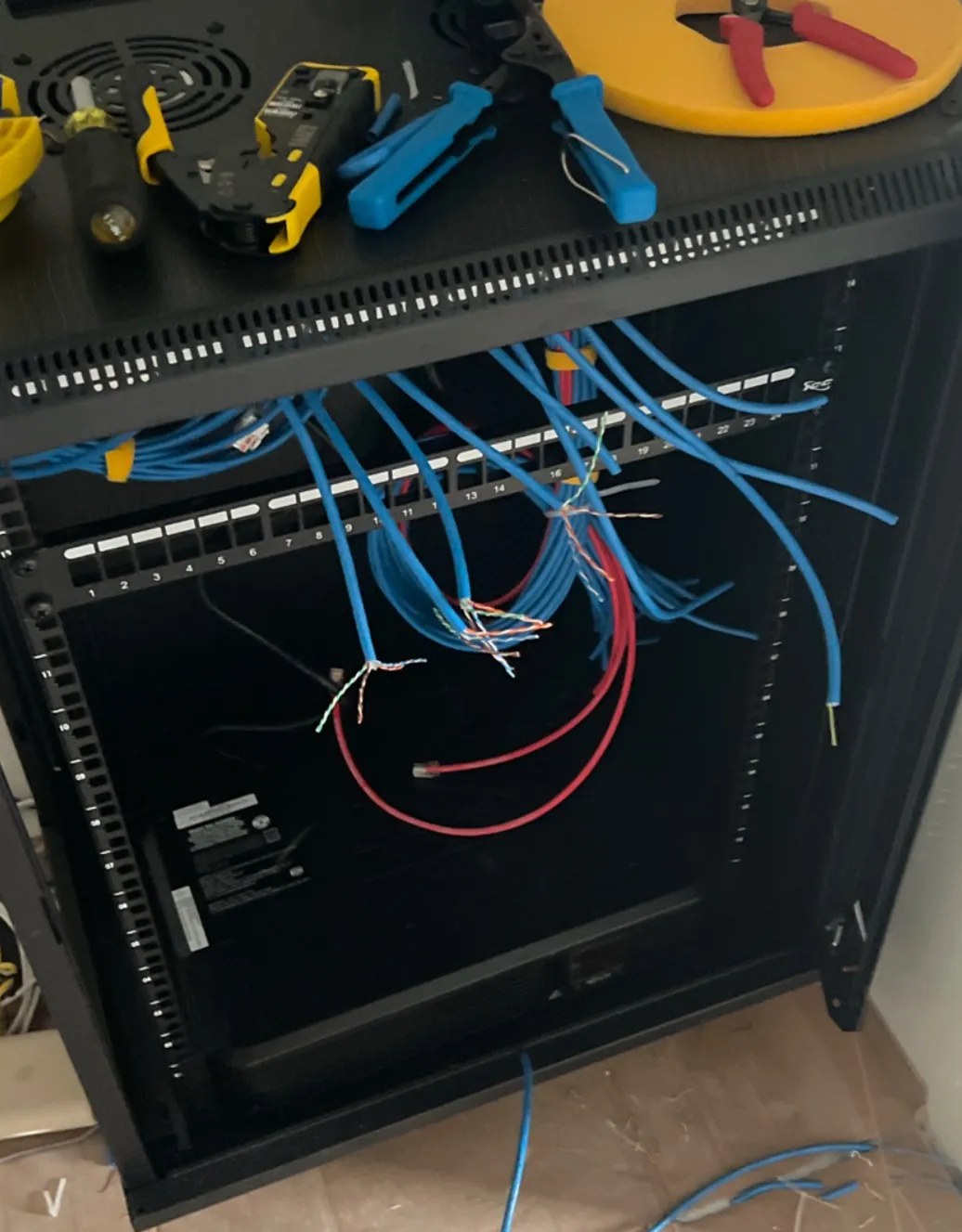
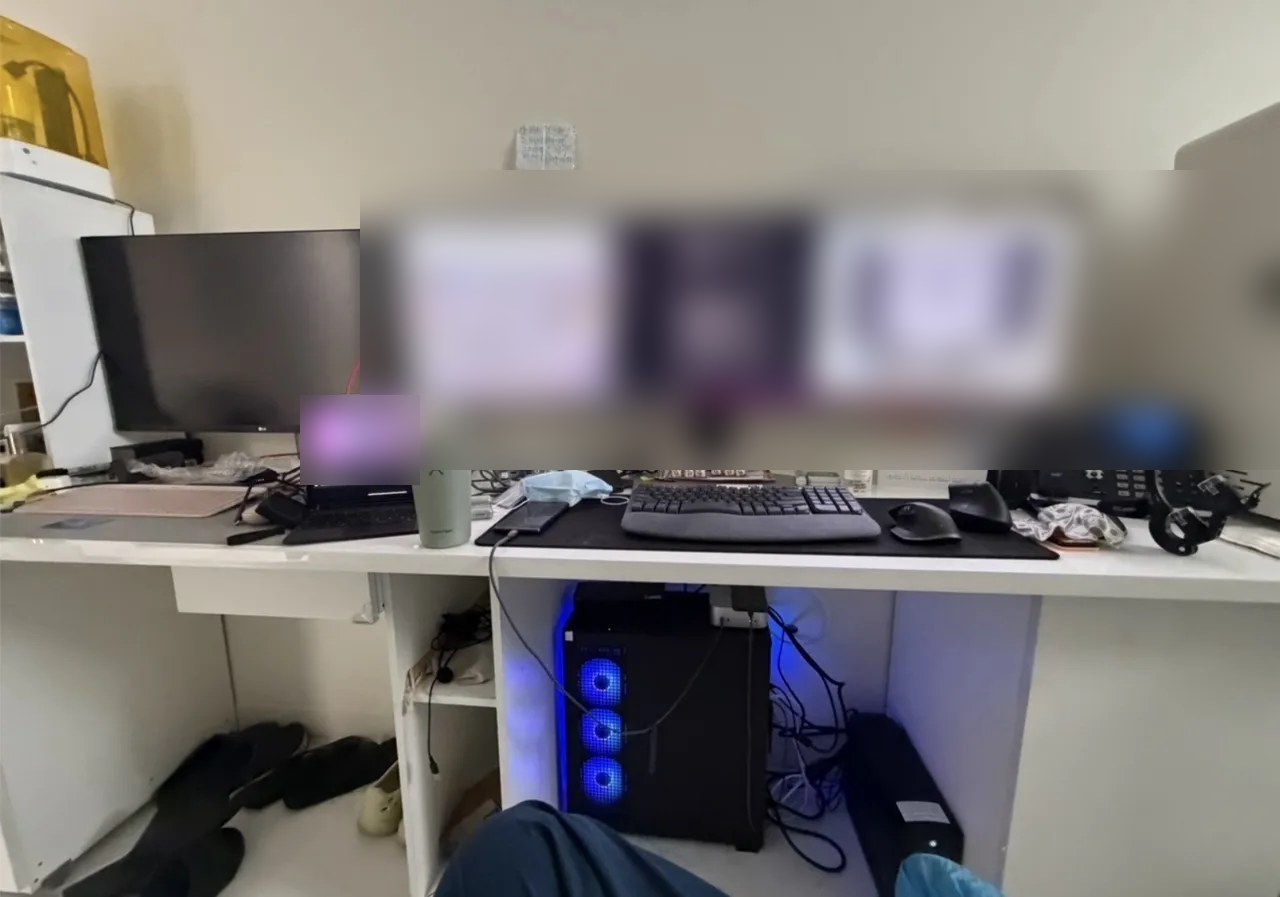
After crimping cables until his fingers hurt, he thought, “Wait, I can actually do this?” Before he knew it, a server rack had appeared in the back room. While running cable, he also stuck an NFC tag (a small chip read when a phone or card touches it) on the entrance door to create attendance records. Tapping a phone or card when arriving or leaving automatically calculates work hours and hourly pay, which feed directly into payroll.
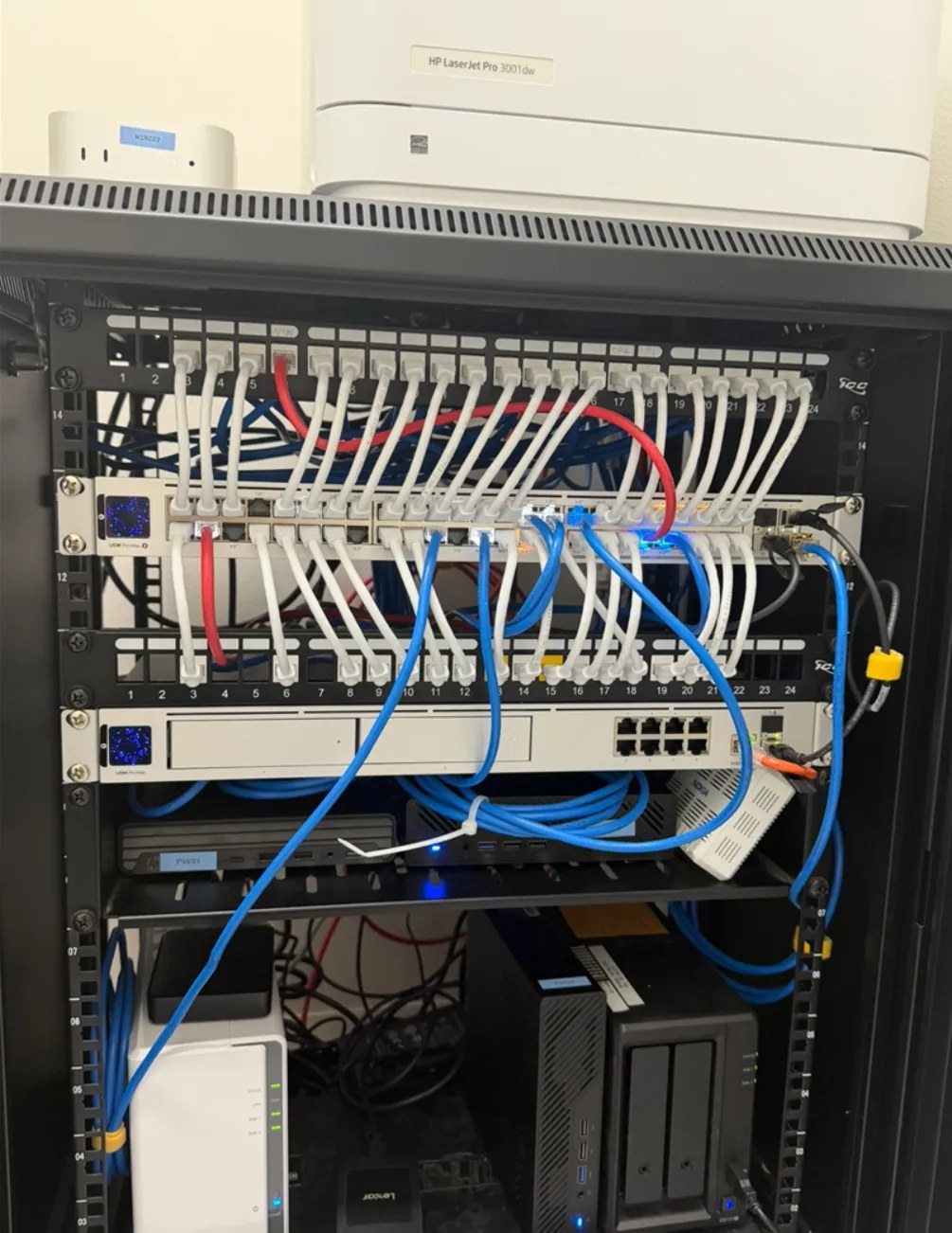
The director is now known among staff as the “IT lead who also sees patients.” He said he spends more time wrestling with AI in the back room than in the treatment room.
2. Six Things the Director Built
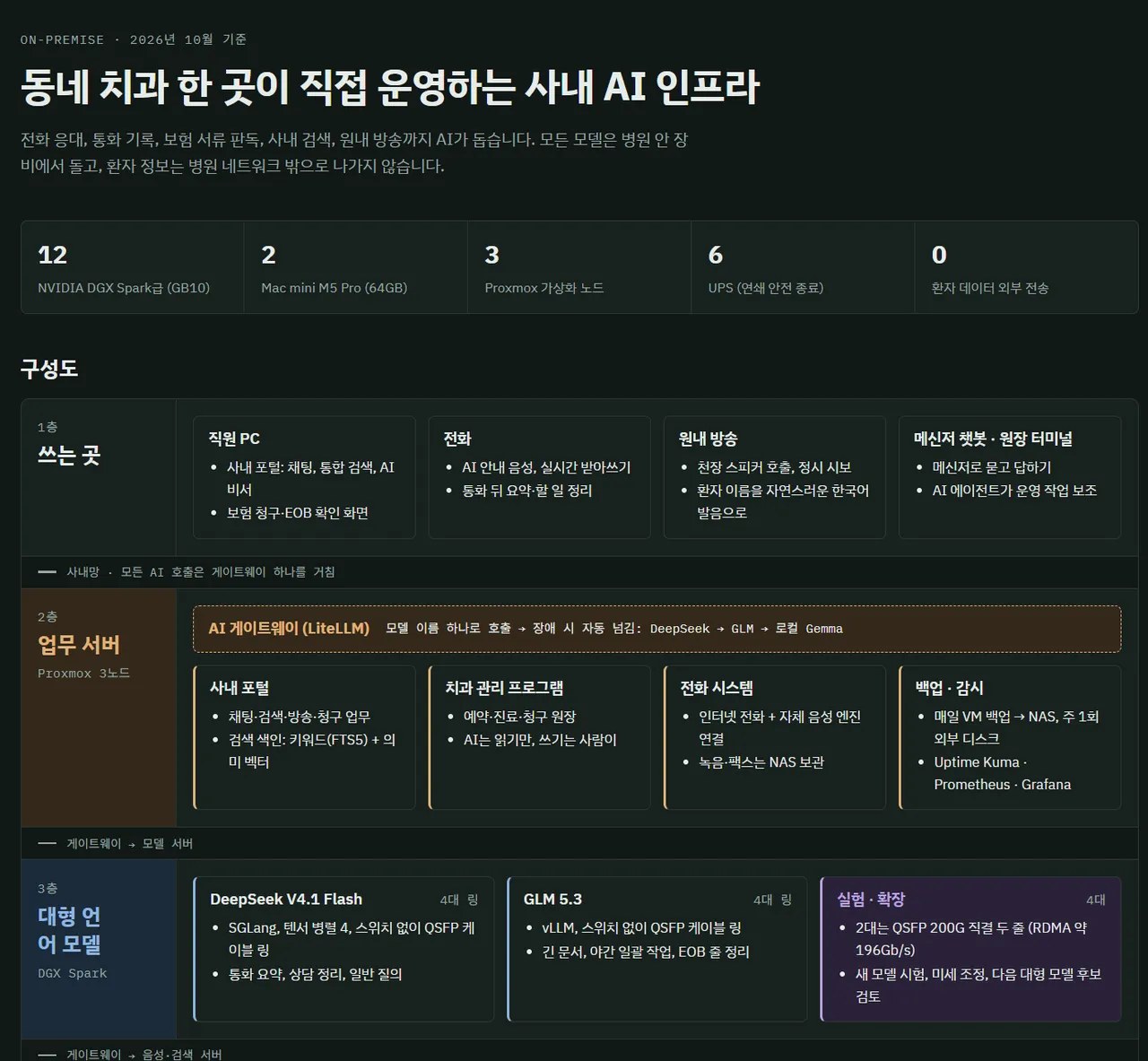
The director set one principle: patient information never leaves the clinic. So the AI that handles patient data runs directly on equipment inside the clinic, and he built the six items below on top of it.
| What he built | What it does | Figures the director published |
|---|---|---|
| AI phone handling | Own phone switchboard, first AI-voice response, real-time transcription, call summaries and to-do lists | 0.1 seconds to first sound |
| Insurance document matching | Line-by-line matching of insurer payment records against clinic records, sorted into “confirmed” and “needs review” | 904 documents and 3,389 pages in 69 minutes; 77% of 6,928 lines auto-confirmed |
| Internal search | Unified search across call logs, texts, insurance documents, faxes, and manuals | 26 of 28 real staff questions answered |
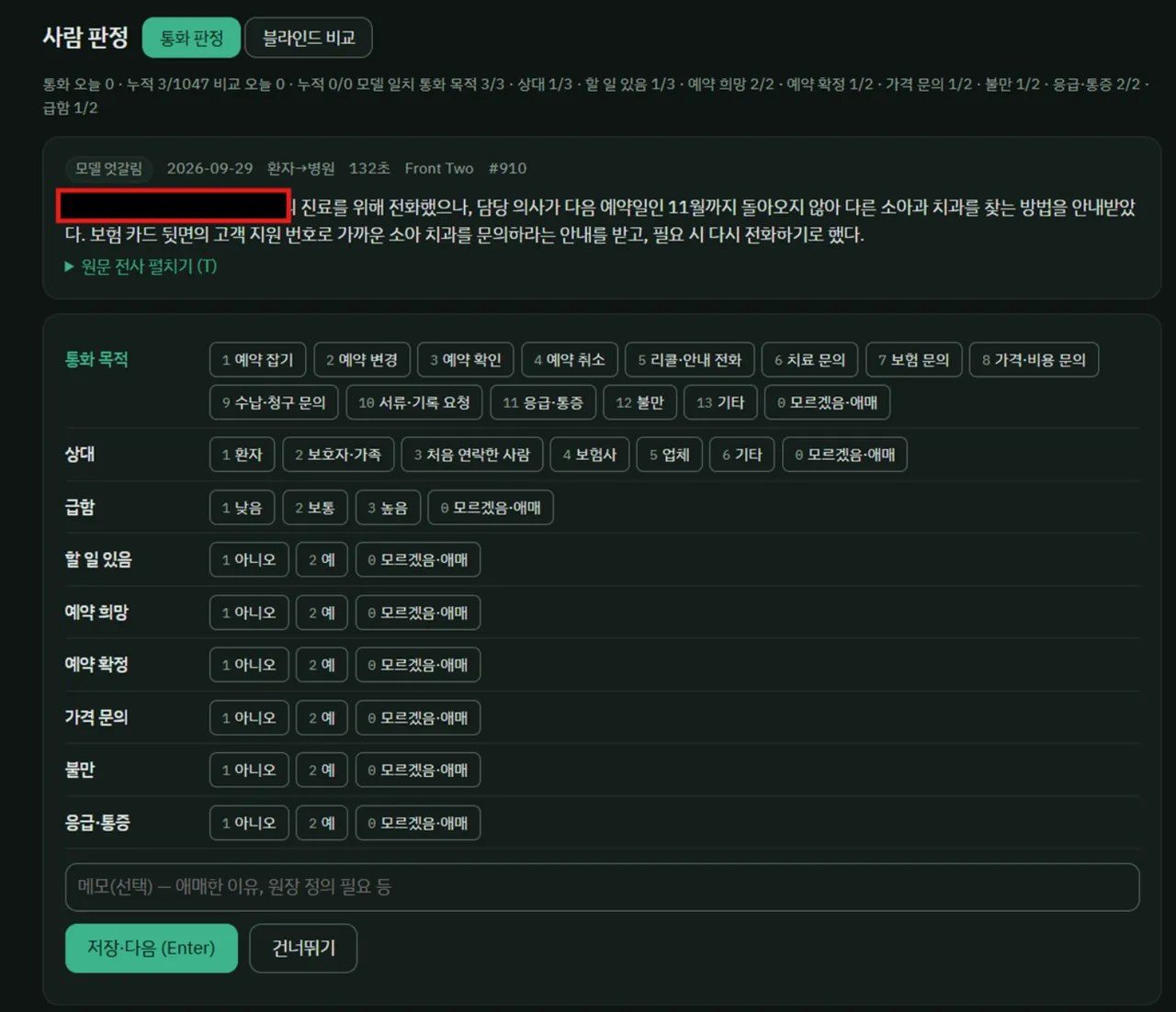
| Human grading screen | The director grades AI-sorted calls with number keys | A few seconds per item |
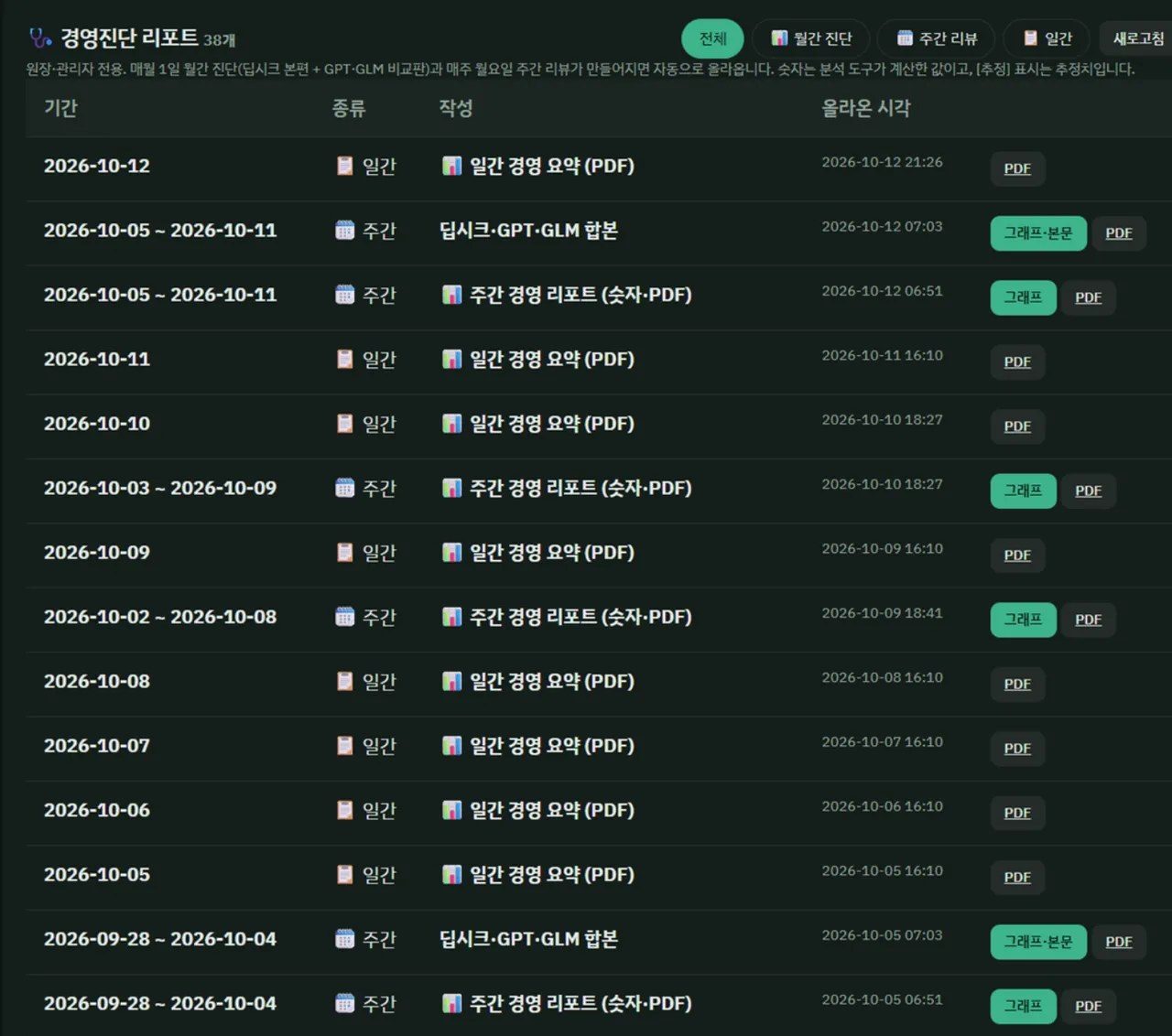
| Management reports | Auto-generated daily summaries, weekly charts, and a monthly diagnostic PDF | Daily PDF every afternoon |
| Internal messenger and consult records | Replaces group chat rooms, calls the treatment room, transcribes consultations | Chat server in the clinic’s back room |
The insurance document matching had the biggest effect, he said. The job staff hated most shrank to reviewing just the 23% marked “needs review.”
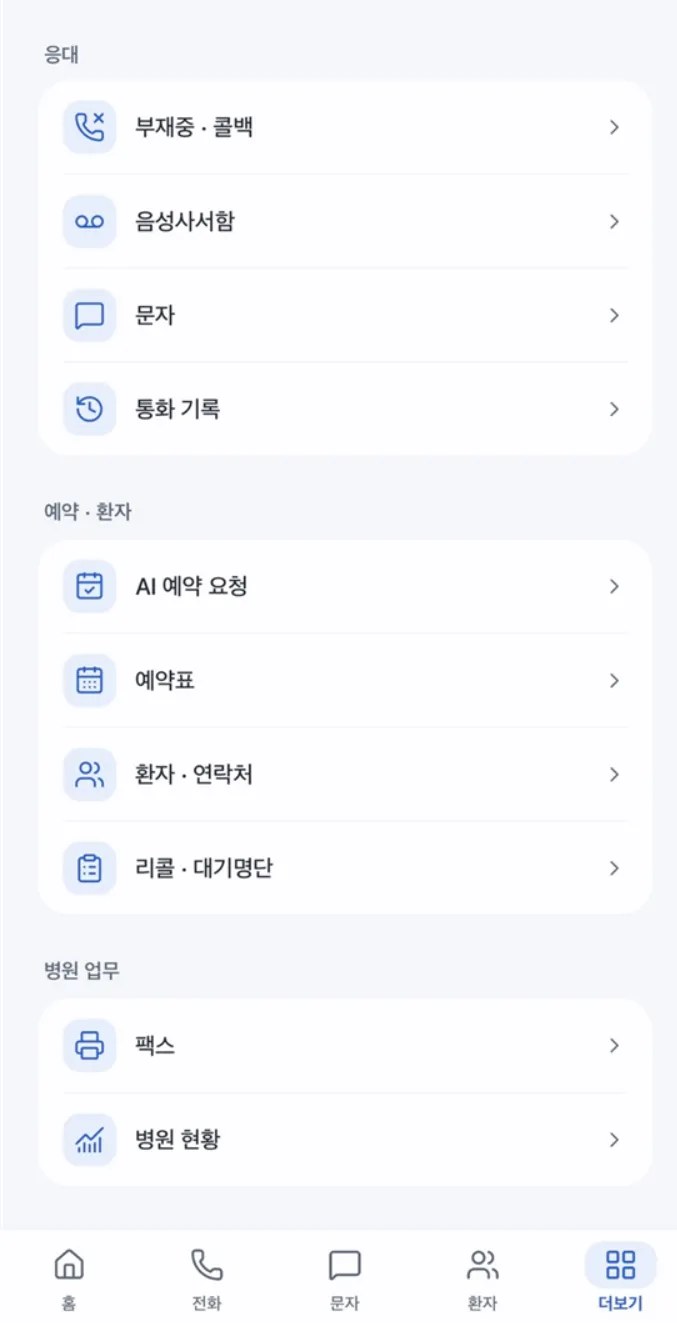
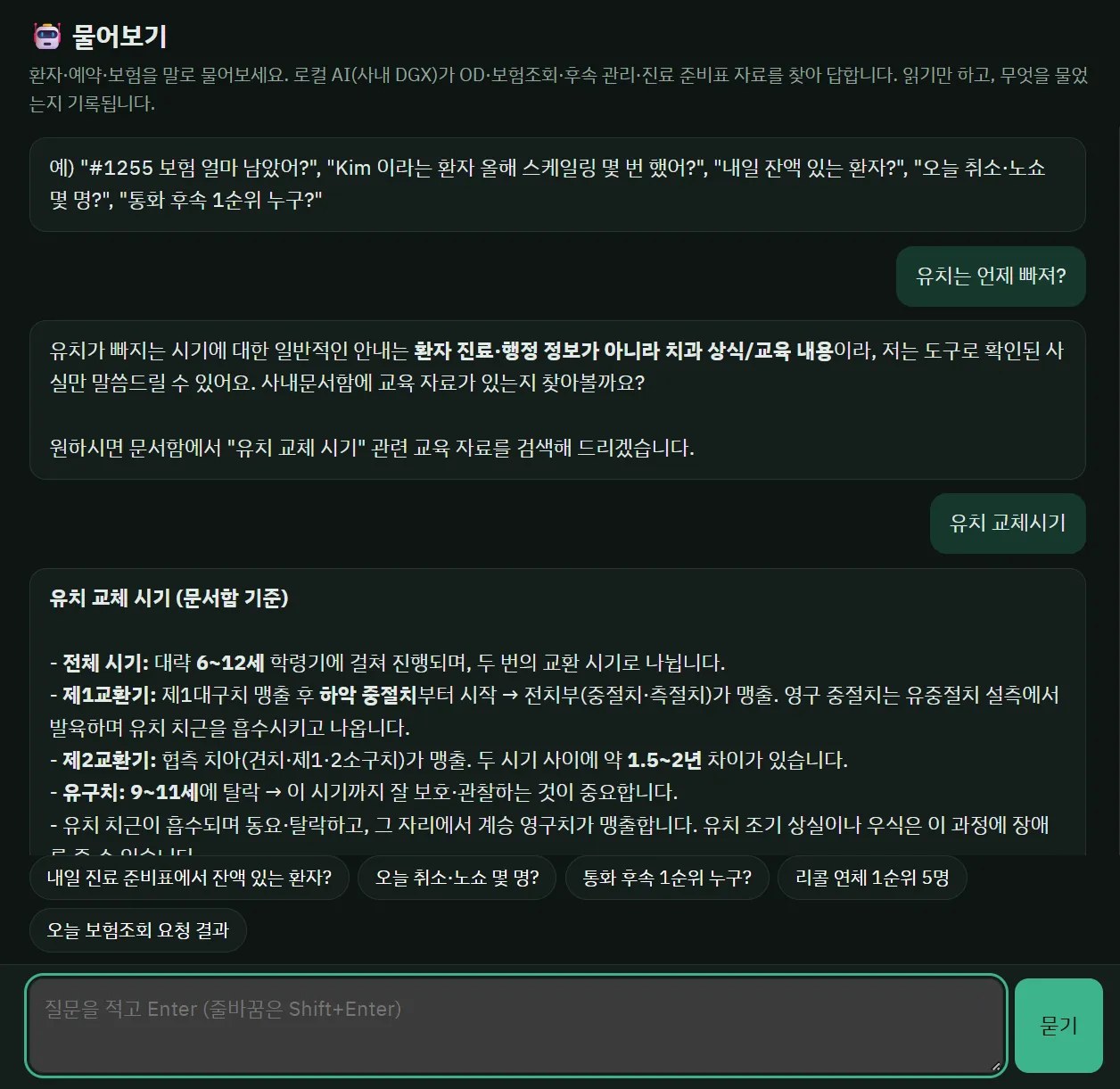
Management reports now show up automatically every day, week, and month. He used to sigh over Excel at the end of each month. Now, he says, he just opens one PDF in the morning.
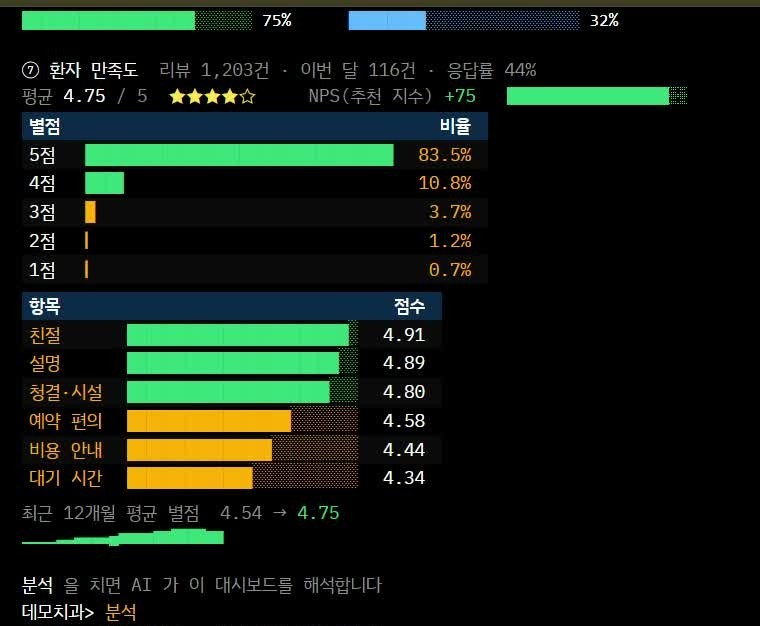
The director also built a clinic-only CLI. Type “How many insurance claims were denied yesterday?” on the black screen of the treatment room monitor, and you get an answer. Staff reportedly asked him whether he was hacking something.
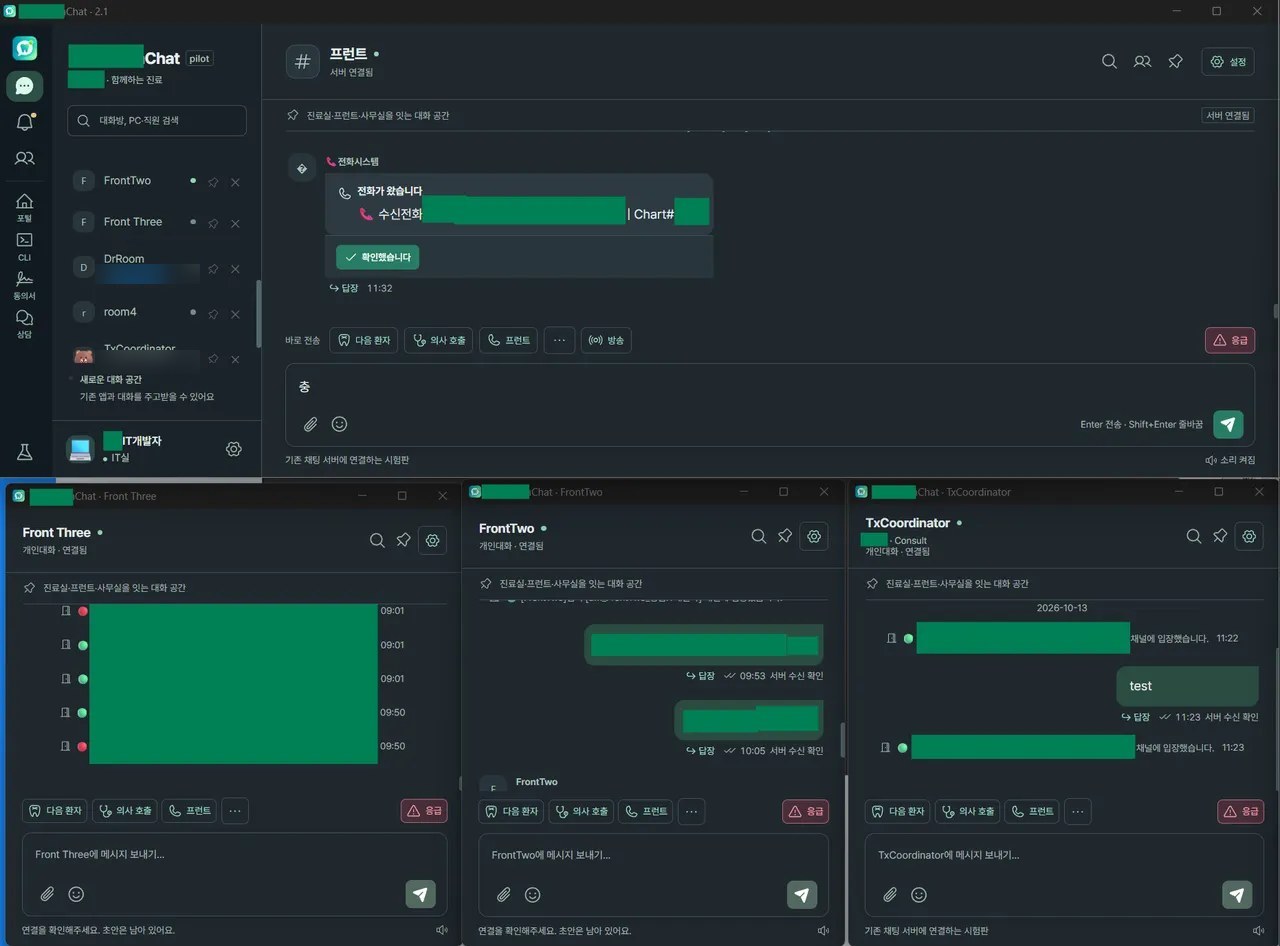
Staff communication moved from group chats like KakaoTalk (South Korea’s dominant messaging app) to an in-house messenger he built. This got rid of both the group chat buzzing after work and patient talk leaking to outside servers. The consultation manager asks the director about treatment fees by chat, without leaving her seat during a consultation.
3. Why the Clinic Moved Faster Than the Company
Up to here is what the director published. From here on is my own view.
Our AX explainer covered three bottlenecks that block AX at companies. This article looks at the opposite side: the conditions that made AX fast here.
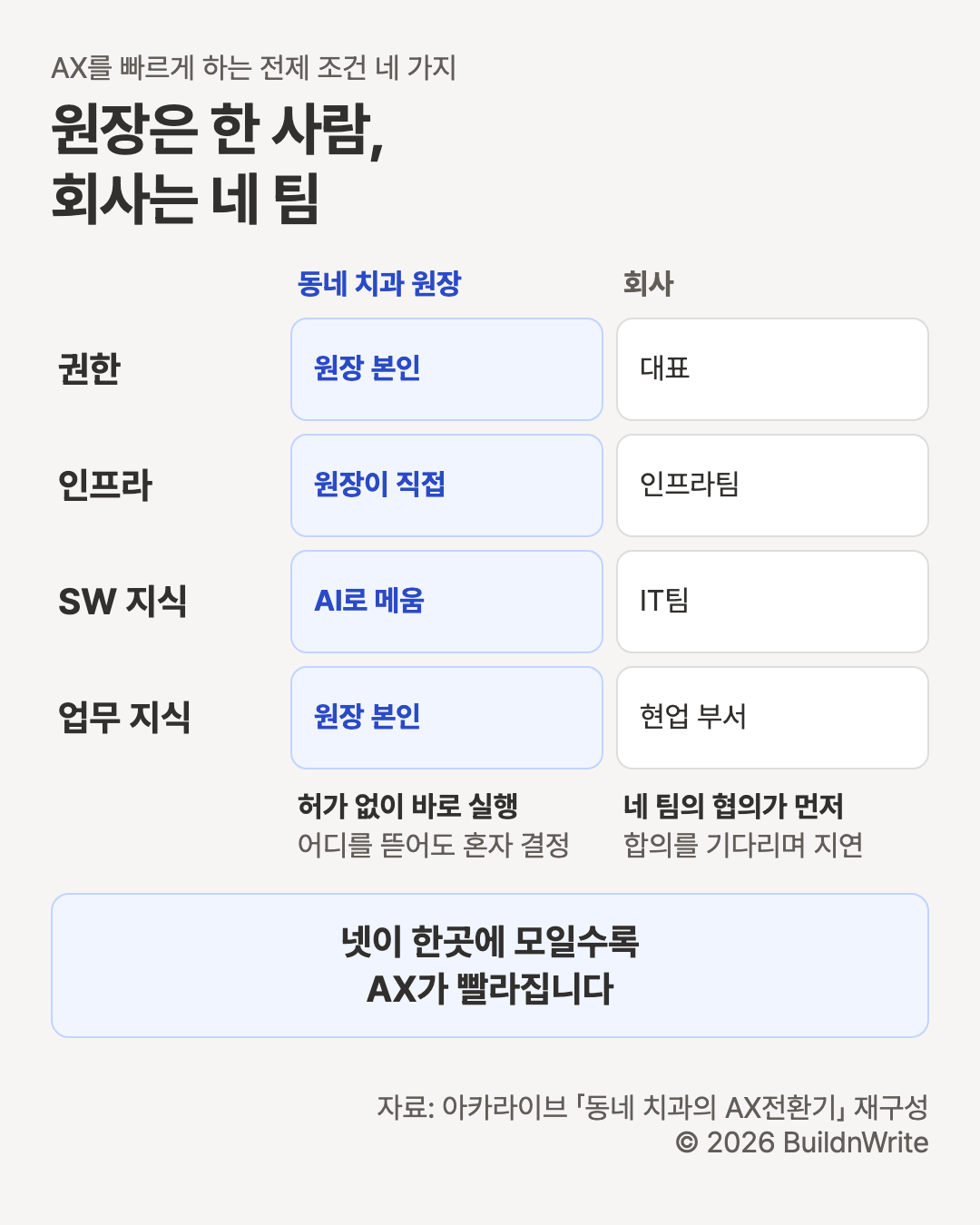
- Authority: The director had every permission in the clinic. He could rework any part of the organization without anyone’s sign-off.
- Infrastructure: He installed everything himself, from network cables up to servers.
- SW knowledge (the knowledge to build and fix software): He barely wrote code; AI coding agents filled the gap. Still, he remained responsible for maintaining and protecting what he built.
- Business knowledge: The director wrote, “I have to know what to ask for.” The person who knew dental work best was the director.
The director wrote that role-specific agents work by messaging each other.
“Restarting this server, is it OK on your end?” “Hang on, I’m in a recording test right now.”
(Arca.live, “The Dental Clinic’s AX Journey,” the director’s post)
On the day two new Mac minis arrived, he described his own role like this:
What I did: “yes,” “do it,” “off,” plugging in cables, unplugging plugs lol (+ I also saw patients during the day. Seriously.)
(Arca.live, “The Dental Clinic’s AX Journey,” the director’s post)
In a company, these four are split among the CEO, the infrastructure team, the IT team, and the business units. Adding a server means negotiating with infrastructure, connecting data means working with IT, and deciding what to automate means consulting the business units. The clinic was a centralized setup where that negotiation ended inside one person’s head.
4. Success Metrics and Rewards Landed on One Person
Conditions alone aren’t enough; there has to be a reason to move. For the director, the reason was clear. He named three leaks he had plugged:
- Replacing the accountant: Once AI handled monthly figures, the management report, and spotting unusual spending, he replaced the existing accountant. Tasks that need official sign-off, like tax filing, still go to a human expert.
- Cancelling SaaS subscriptions (online services you pay for monthly): He moved call-recording summaries, document reading, and appointment texting onto clinic servers one by one, then cancelled each subscription.
- Zero marketing spend: He ended blog ghostwriting, search ads, and search-ranking agency fees, and handled search visibility directly with AI.
Time metrics come with numbers, like the insurance document matching in Section 2. The director did not disclose the savings in won.
External research points the same way. MIT NANDA’s “The GenAI Divide” (2025) found that about 95% of enterprise generative AI pilots produced no measurable profit-and-loss impact, and that the highest return came from back-office automation that cut outsourcing costs (Fortune report). The sample is small, with 150 interviews and 350 surveys. The accounting and marketing services the director cut were exactly that kind of outsourcing cost.
In internal AI training and hackathons, saved time sometimes never turns into rewards for the staff who take part. EY’s Work Reimagined 2024 survey of 17,000 employees found that workers prioritized bonuses and incentives, while employers prioritized health and well-being. In June 2026, Meta staff pushed back against a company-wide AI hackathon planned for July, saying there was “no time and no incentive” (HR Grapevine).
5. What Should Companies Do?
A company can’t give one person all the authority the director had. But it can gather the conditions and the rewards into one team. According to AvePoint’s 2026 AI report, about 90% of organizations delayed AI deployment by nearly six months on average due to readiness gaps. Slow negotiation is not unique to one company.
- Reward plan: Tie the time and cost saved to the evaluation and rewards of the team that owns the work.
- Company-wide project: The CEO, infrastructure team, and IT team share one project to cut out negotiation steps.
- Small first win (quick win): Start with one task in a department that has no sensitive information.
The best starting department is the one with the lowest data security classification, because data security is usually where the biggest bottlenecks form. Examples include marketing research, answering internal policy questions, and meeting-minute summaries, which involve no personal or financial data. I laid out the order in which AI automation takes root in a company in our four-stage adoption guide.
Gathering authority doesn’t mean loosening controls. The director was alone, but he put several safeguards in place so the AI couldn’t act on its own. This is worth copying.
| Safeguard the director set up | Failure it prevents |
|---|---|
| Changes to live settings require the director’s direct approval | Agents changing settings on their own |
| Agents’ secondhand claims that “the director approved it” don’t count | Unverified approvals |
| Agents cross-review each other’s work | One agent’s mistake reaching production |
| A human grading screen | Errors piling up from AI classifications nobody checks |
| AI never writes directly into electronic charts | Contamination of medical records |
| Analysis software calculates the numbers; AI only interprets | Fabricated revenue figures |
Cross-review actually prevented an incident. A missing setting made the broadcast name conversion take six seconds each time, and another agent caught it before it went live, he said.
People’s feelings matter as much as the safeguards. When insurance matching started running, a staff member asked the director:
So now that this works, a staff member asked me, “Am I going to be fired now?”
(Arca.live, “The Dental Clinic’s AX Journey,” the director’s post)
AX leads may get the same question. The director’s answer, in his closing remarks, was this:
Rather than AI replacing people, it takes over the work people hated. Staff only need to look at the “needs review” items, and they don’t have to re-listen to calls.
(Arca.live, “The Dental Clinic’s AX Journey,” the director’s post)
6. How Should Individuals Start?
You don’t need to start with a server rack like the director did. Individuals don’t have company-level negotiations, and the data you use for your own work doesn’t carry the weight of patient records.
- Measure: Pick one task you repeat at least twice a week, and write down the time and money each run takes.
- Attach it to your laptop: Install Claude Code or Codex on the laptop you already have, and start with one AI subscription (Claude, Codex, or Gemini, about KRW 29,000 a month).
- Use a Mac mini if you need overnight runs: Keep a used Mac mini as a home server, reach it from outside through Tailscale, expose public services through Cloudflare, and get alerts through Discord. All three are free.
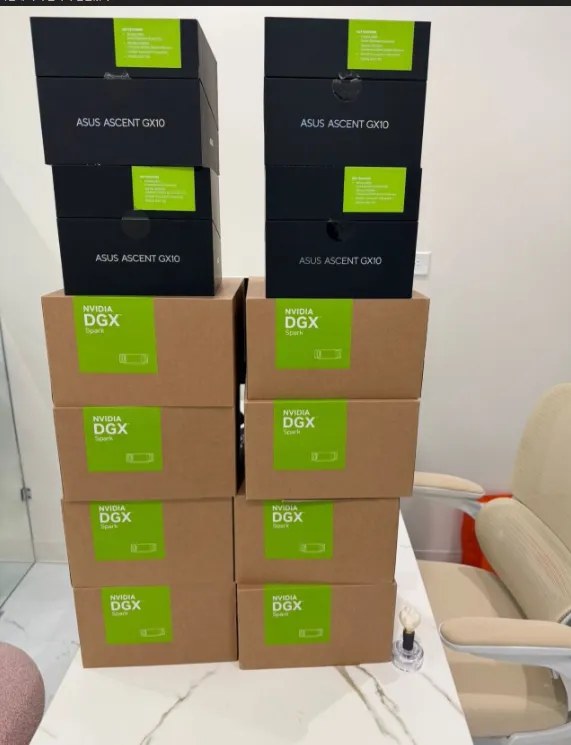
The director bought 12 DGX Spark-class units so that patient data would never leave the clinic. The official price of a DGX Spark is $4,999 to $6,950 per unit. The data you use for your own work doesn’t carry that much security risk, so there’s no reason to spend big on hardware.
I don’t recommend the subscription AI agents that have been getting attention lately. They work without installation, and I also assumed they’d be cheaper than buying hardware. When I checked, ChatGPT dots alone came to at least about KRW 1,740,000 a year, which costs more than the Mac mini setup.
Subscription prices are as of October 2026 and Mac mini prices as of July 2026. The exchange rate is assumed at KRW 1,450 per US dollar.
| Setup | Upfront cost | Monthly cost | One-year total |
|---|---|---|---|
| Your current laptop + Claude Code or Codex | KRW 0 | About KRW 29,000 | About KRW 350,000 |
| Used Mac mini home server + agent | Used M4 around KRW 900,000; asking prices up to KRW 1,150,000 | About KRW 29,000 | About KRW 1,250,000 to 1,500,000 |
| ChatGPT dots | KRW 0 | Pro $100~200 (about KRW 145,000 to 290,000) | At least about KRW 1,740,000 |
| xAI Grok Bot | KRW 0 | Included in a SuperGrok-tier subscription or a paid Cursor plan | Varies by plan |
| Meta Muse | Not yet launched in South Korea | Free to $100 | Not available in South Korea |
- Mac mini: used M4 with 16GB RAM and 256GB storage, around KRW 900,000 in July 2026 community prices, with asking prices up to KRW 1,150,000 (Damoang (a Korean tech forum) price post)
- ChatGPT dots: requires a Pro or Business Premium plan
- Tailscale personal plan, Cloudflare free tier, and Discord: calculated at KRW 0
BuildnWrite helps teams build AI agents that keep running. About BuildnWrite ›